Wednesday, July 20, 2016

What Bankruptcy CAN’T Do: Intents and Purposes, Part Two

What Bankruptcy CAN’T Do: Intents and Purposes, Part Two
Damn Lies!
Bankruptcy helps relieve the burden of credit card and loan debts, medical bills, back utilities and rent, and so forth.
But there are some debts that bankruptcy does not affect; that are “immune” from a bankruptcy discharge - the word is “non-dischargeable”. This means that when the smoke clears and the bankruptcy is over, these debts will still have to be paid.
My previous blogs were about  taxes, traffic fines, speeding tickets and their ilk, and student loans.
            In my previous blog, I talked about some Intentional Debt.
            Here is another example of Intentional Debt: 11 USC 523(a)(2) is the part of the Bankruptcy Code that controls if a debt is discharged or not discharged. A debt is not discharged in bankruptcy if it is a debt “… for money, property, services …” (or “… an extension, renewal, or refinancing …” of a loan) if you got the loan because you used “… a statement in writing … that is materially false; (that was about your) … financial condition; on which the creditor … reasonably relied; and that the debtor (made the statement in writing) … with intent to deceive.
            This time we are still talking about lying, but lying on paper specifically about your financial condition.
                Wait. Wouldn’t that be included in the “false pretenses, a false representation, or actual fraud” you talked about last time? Yes, but that part of 11 USC 523(a)(2) specifically says that does NOT count to a writing about your financial condition.
            Why not?
            I don’t know. Someone, somewhere, must have been able to worm their way around the false pretenses, a false representation, or actual fraud” because it was something in writing about their financial condition. So the legislature added this extra part.
            In this case, I am talking about writing on an application (or anything in writing) that you make $40,000.00 per year when you make $20,000.00 per year. When you put in writing that you own your car when you still have a loan on it.
            It’s the Nixon problem. It’s not the fact that you did it (which is bad enough) but the fact that you lied about it – on paper.
            And this specific part of the code deals with anything in writing about your financial condition. When you checked that you were NOT convicted of any crime when you were; that doesn’t count – even if you intentionally lied (and that is not something you tend to forget). Of course, the creditor can still “get” you on the false pretenses, a false representation, or actual fraud” part.
***
            Or can they? Remember I said that it is difficult for a creditor to win these kinds of actions. If only because a creditor – usually a company in the business of lending money – has ways to check and double-check what you say.
            Did they ask for copies of your paycheck stubs? How did they verify your income? Did they NOT verify your income?
That was kind of … well … stupid wasn’t it?
            A common defense as to not listing all your debt is to ask if the company got a credit report before approving the loan. Does the credit report show the unlisted credit card? Why did they approve the loan in the first place when they SAW there was a credit card not listed on the loan application?
            This is especially helpful when they say “I wouldn’t have given her that loan had I known she owed that much on her Discover Card!”
            And they will ALWAYS say that.
***
            If, in the course of the lawsuit, it seems the judge is siding with the debtor – and a good attorney can tell most of the time – the attorney may pursue how the debtor got the loan? Did they get a letter saying they were pre-approved? Well, if they were pro-approved it hardly matters WHAT they put on their application, doesn’t it? J
***
            The Court will use reasonableness and common sense with these issues. Forgetting one or two other loans on an application? That’s probably okay. Forgetting about tens of thousands of dollars’ worth of debt? That is NOT reasonable.
            You forgot your name was on your brother’s car? That’s probably okay. Forgetting that you DON’T owe on the car you are currently driving? That is not reasonable.
            Stating you make $35,000.00 per year when you make $40,000.00? That’s probably okay. But if you were out of work when you made the loan? That is not reasonable. Did the question ask about potential future income? We might be back to reasonable again. This is the kind of thing your attorney will ask the creditor – do you ask about his current situation? Did you follow up on the questions about potential income?
***
                “Intent to deceive”. That is the key. Cackling with glee over your nefarious deed. Twirling your mustache. Nyah-ah-ah.
***
If the creditor wins and the debt is ruled non-dischargeable, it will survive the Chapter 7 bankruptcy and you will have to resume paying it when the bankruptcy case is over. In a Chapter 13, any amount not paid by the disbursing Trustee will survive, including unpaid interest (if the original loan allowed for interest). In neither kind of bankruptcy will you have to pay on the debt during the bankruptcy.
***
More “Intentional Debts” next time …
Copyright 2016 Michael Curry

My name is Michael Curry and I have practiced law in Mount Vernon, Fairfield, Flora and throughout Southern Illinois since 1992. During that time, I have helped more than 5,000 people (and businesses) overcome their financial difficulties by filing for bankruptcy. As a solo practitioner, I will also be happy to help protect you and your family’s future with estate planning, wills, powers-of-attorney, real estate transactions and other legal services.
Please call or text me at 618-246-0993, email me at michael.curry.law@gmail.com  or send me a letter:  123 South 10th Street, Suite 507, PO Box 93, Mount Vernon, IL 62864

Monday, July 18, 2016

What Bankruptcy CAN’T Do: Intents and Purposes, Part One


Lies!

Bankruptcy helps relieve the burden of credit card and loan debts, medical bills, back utilities and rent, and so forth.
But there are some debts that bankruptcy does not affect; that are “immune” from a bankruptcy discharge - the word is “non-dischargeable”. This means that when the smoke clears and the bankruptcy is over, these debts will still have to be paid.
My previous blogs were about  taxes, traffic fines, speeding tickets and their ilk, and student loans.
Today I’d like to discuss what I call Intentional Debt. It’s not a legal phrase and you won’t find it in a law dictionary or on other legal websites or blogs.
I made it up.
Intentional Debts are the kinds of debts incurred that you should not have incurred – and knew you should not have. You were being naughty when you incurred the debt. Shame shame!
***
Here is the law that states that some intentional acts are non-dischargeable. The law that says so is 11 USC 523(a)(2). I will reprint it here without all the legalese:
A debt is not discharged in bankruptcy if it is “… for money, property, services, or an extension, renewal, or refinancing of credit … obtained by … false pretenses, a false representation, or actual fraud, other than a statement … (of) … the debtor’s or an insider’s financial condition.”
In other words: you lied.
About anything. Whether it was on the loan application or over the phone or in person. If you intentionally lied to get the loan, that debt can be ruled non-dischargeable and you will have to continue to pay it even though you filed for bankruptcy.
If you said you were working and you were not. Or that you were NOT working and you WERE (this applies to overpayment of unemployment, for example), if you said you were current on your rent or mortgage and you were not. If you said you owned your car and you did not. If you said you have no children living with you and you have two. You get the idea.
Remember we are talking “intentional” …
“You said you co-owned a car with your ex-boyfriend but he traded that car in the month before!”
“He did?”
***
Let’s pause a minute and let reality sink in. It’s hard to get a ruling against you with this kind of action. Because it’s hard to prove intent.
“You didn’t list the fact that you still owe on a credit card!” Maybe when you filled in the loan application you honestly forgot about that. You DID list the car, the OTHER credit card, the computer loan … maybe it was an honest mistake. Maybe the application only had room for a few loans and you didn’t have space to put it in. Maybe the loan was going to be used to pay OFF that credit card and so why bother list it? (Hey, that line of logic made sense to you at the time – and it still makes sense!).
“You didn’t list all your bank accounts on the application!” Was it a Christmas club and the application was filled out the spring (and you forgot about the ten dollars in it)? Was it a joint account that you forgot about?
The creditors will comb through your bankruptcy paperwork for things like this.
Fortunately things like this fall through. “I got the bank account after I got your loan but before the bankruptcy. Same with the credit card. Same with the car loan.”
If the creditor is smart they will ask your bankruptcy attorneys about these discrepancies before bringing any court action. Your attorney will ask you about the facts (when did you open the account? When did you buy the car or get the credit card?) and relay them to the attorney for the creditor. The creditor can then decide whether it is worth filing an action in the bankruptcy court.
Do you see the inference here? As long as the creditor can prove you were NOT twirling your moustache and snarling, “nyah-ah-ah!” after getting the loan, you are probably safe.
The creditor still has a right to try the case before the bankruptcy judge. You will still have to defend yourself or hire an attorney to help you defend yourself.
Keep that in mind: do you want to pay an attorney a thousand dollars to defend an eight hundred dollar loan? 
Check with a local bankruptcy attorney anyway if this happens. It may be you have a solid defense. And in some cases the losing side pays the winner’s attorneys fees. Since the creditor who is filing the challenge to the bankruptcy is usually a business, collecting the attorney’s fees will be easier than if it were an individual.
***
Read through those examples above and remember that your bankruptcy trustee will also be listening. You didn’t list a bank account on your loan? Was it also missing from the bankruptcy schedules? You might not only be in trouble in this proceeding to have the loan ruled non-dischargeable, but NOW the trustee might file an action for not telling the truth on your bankruptcy schedules.
Calm down. If the missing bank account (or missing vehicle or other asset) is not enough to make the debt in question non-dischargeable, it is probably inconsequential enough to escape the trustee’s wrath, too. To be safe, amend the schedules to add the bank account or vehicle or asset anyway…
***
One last example:
“You forged your grandmother’s name as a codebtor so you could get the loan?” Um, yeah. If that is true; I think they got you. You’d better own up and admit that debt will survive the bankruptcy …
***
The bottom line is that if you were cackling with glee over “getting away” with what you did – getting the loan – that loan may survive the bankruptcy if the creditor (the person or company you owe the money to) challenges your bankruptcy.

A good local bankruptcy attorney will have the experience and knowledge of your district to advise you how the bankruptcy judge of that district views and reviews these factors.
***
If the creditor wins and the debt is ruled non-dischargeable, it will survive the Chapter 7 bankruptcy and you will have to resume paying it when the bankruptcy case is over. In a Chapter 13, any amount not paid by the disbursing Trustee will survive, including unpaid interest (if the original loan allowed for interest). In neither kind of bankruptcy will you have to pay on the debt during the bankruptcy.
***
More “Intentional Debts” next time …
Copyright 2016 Michael Curry

My name is Michael Curry and I have practiced law in Mount Vernon, Fairfield, Flora and throughout Southern Illinois since 1992. During that time, I have helped more than 5,000 people (and businesses) overcome their financial difficulties by filing for bankruptcy. As a solo practitioner, I will also be happy to help protect you and your family’s future with estate planning, wills, powers-of-attorney, real estate transactions and other legal services.

Please call or text me at 618-246-0993, email me at michael.curry.law@gmail.com or send me a letter:  123 South 10th Street, Suite 507, PO Box 93, Mount Vernon, IL 62864

Friday, July 8, 2016

What Bankruptcy Can't Do - Student Loans

There are some debts that bankruptcy does not affect. You can file bankruptcy to help relieve the burden of credit card and loan debts, medical bills, back utilities and rent, and so forth.
But some debts are “immune” from a bankruptcy discharge - the word is “non-dischargeable”. This means that when the smoke clears and the bankruptcy is over, these debts will still have to be paid
My previous blogs were about  taxes and traffic fines, speeding tickets and their ilk.
The prior two categories of debt are pretty black and white. Most of these debts do not discharge. Period. Taxes can discharge only under very specific criteria.
The discharge of Student Loans is not as black and white. It is one of the few debts listed as otherwise non-dischargeable but in which the court has some discretion. The judge is allowed to judge…
***
 Section 523(a) of the bankruptcy code (Title 11) lists all of the debts that are not discharged in bankruptcy. In this blog series I do not want to get bogged down in quoting and citing the code with all its legalese. I want to make the list of non-dischargeable debt clear
But in this case, since the “rule” about when a student loan is dischargeable is so grey … so ephemeral … I want you to read it.
523(a)(8): unless excepting such debt from discharge under this paragraph would impose an undue hardship on the debtor and the debtor's dependents, for - (A)(i) an educational benefit overpayment or loan made, insured, or guaranteed by a governmental unit, or made under any program funded in whole or in part by a governmental unit or nonprofit institution; or (ii) an obligation to repay funds received as an educational benefit, scholarship, or stipend; or (B) any other educational loan that is a qualified education loan, as defined in section 221(d)(1) of the Internal Revenue Code of 1986, incurred by a debtor who is an individual …
Over the years the pendulum has swung on what is included in a “student loan”. The loan itself? Of course. But what about tuition (fees and costs for admission and classes)? Once upon a time those debts were non-dischargeable, too. As of now the pendulum swung the other way - towards those kinds of debt NOT being dischargeable.
As of this writing the pendulum has swung so far as to say a college cannot refuse transcript requests if you file on tuition. At one point a school could refuse transcripts.
Once upon a time the tab you had at the school book store was non-dischargeable. Or at the least the school could refuse your transcript request until you paid for that stick of gum.
Today, though, only the loan itself is non-dischargeable.
Today.
***
The phrase on which most debtors rely on discharging student loans is “… unless (the survival - non-dischargeability - of the student loan) would cause an undue hardship…”
What is an undue hardship?  Most courts look at a person’s past, present and future. Have they tried their best to pay the loan? Does a review of their current finances allow for any room for a payment on the loan? And what does their future income and expenses look like?
Those are the criteria, usually. Some courts are stricter than others on this. Your local bankruptcy attorney will know will know if discharging student loans in your district is only just difficult or very very difficult. It’s not easy and it’s not meant to be easy. I am avoiding editorializing here – ask me personally – but I think it is fair to say the laws make it quite hard discharge your student loans.
What do I mean?
If a Debtor is wearing a nice suit during the hearing, will that hurt his chances? A gold ring? If someone can afford a house payment does that mean they can afford their student loan?
That sort of thing.
A good local bankruptcy attorney will have the experience and knowledge of your district to advise you of the possibilities of student loan discharging in your district.
***
What about Chapter 13s? Even I have to admit that discharging student loans in a Chapter 13 are close to impossible.  If you can make a monthly payment of $100.00 (or more) for three-to-five years you can continue that payment on a student loan after discharge.
***
I’ll discuss more debts that are non-dischargeable next time.
Copyright 2016 Michael Curry

My name is Michael Curry and I have practiced law in Mount Vernon, Fairfield, Flora and throughout Southern Illinois since 1992. During that time, I have helped more than 5,000 people (and businesses) overcome their financial difficulties by filing for bankruptcy. As a solo practitioner, I will also be happy to help protect you and your family’s future with estate planning, wills, powers-of-attorney, real estate transactions and other legal services.

Please call or text me at 618-246-0993, email me at michael.curry.law@gmail.com  or send me a letter:     123 South 10th Street, Suite 507, PO Box 93, Mount Vernon, IL 62864

Wednesday, July 6, 2016

Incarceration Cost Recoupment non-dischargeable (for now)

WHAT BANKRUPTCY CAN’T DO
Part 2: Traffic Fines, Speeding Tickets, DUI fines, Misdemeanor fines, etc.
Additional
Here is a case from April of 2016 that ties into the topics I have blogged about recently: the dischargeability of debts owed to the government. This case is on appeal and it will be interesting to see how it turns out!
If the Debtor wins on appeal, this shows that attorneys need to review the laws from which these fees grow. I suspect these will be considered loopholes the various states will close quickly!

Pay-to-Stay Debt Dischargeable
Posted by NCBRC - April 12, 2016
A debt owed to the county under a pay-to-stay incarceration cost recoupment program was held to be dischargeable under section 523(a)(7). County of Dakota v. Milan, No. 15-3034 (March 1, 2016).
Jacob Jerome and Ashley Kaye Milan filed chapter 7 bankruptcy in which they listed, as an unsecured, non-priority debt, $3,600.00 owed to Dakota County incurred by Mr. Milan under the state pay-to-stay program for prison inmates. The program, Minn. Stat. § 641.12, subd.3, charges $25.00/day for incarceration expenses including room and board, medical expenses, and other miscellaneous costs. The stated purpose of the program is to permit the County to recoup some of the over $100.00/day cost of incarceration. Unlike court costs and fees which are administered by the district court collector, the pay-to-stay program is administered by the Dakota County Sheriff’s Office (DCSO). In the event the inmate fails to pay the fee the state authorizes “recapture” through garnishment of tax refunds, rent credits and lottery winnings.
The county filed an adversary complaint seeking declaratory judgment that the debt was not dischargeable and the parties filed cross-motions for summary judgment.
Section 523(a)(7) renders nondischargeable a debt that is: 1) a “fine, penalty, or forfeiture,” 2) payable to a governmental unit, and 3) “not compensation for actual pecuniary loss.” The controversy in this case revolved around the first and third prongs of this test. The court reviewed cases examining what types of costs are rendered nondischargeable under this section beginning with Kelly v. Robinson, 479 U.S. 36 (1986), which held that court-ordered victim restitution was not dischargeable. Likewise, other courts have found court-ordered restitution, court costs, and disgorgements all to be nondischargeable. The Milan court concluded: “The direction of these cases is clear: when a court imposes an obligation as part of a judicial order in a criminal case, the obligation is nondischargeable pursuant to § 523(a)(7).”
In this case the debt did not arise out of a court order, however, but out of a program established by the state and administered by the DCSO. The court, therefore, turned to the three-part test to determine whether the debt was nonetheless nondischargeable.
The first part of the test looks at the nature of the debt. The court rejected DCSO’s argument that the costs are “penal” because they are a result of Mr. Milan’s criminal conviction and incarceration. The court found no connection by statute or otherwise between the cost recoupment program and the criminal justice system that would justify calling the costs a “penalty.”  Nor could it be deemed penal as having been included in a court order or as part of the criminal process. As such, it did not meet the first requirement of the exception to discharge test set forth in section 523(a)(7).
The court went on to determine whether the third prong of the test applied and found that it did not. Addressing whether the costs imposed under the pay-to-stay program were compensation, the court again turned to the decision in Kelly where that Court found victim restitution was penal rather than compensatory. The Kelly Court was persuaded by the facts that the victim had no say in whether or how much restitution would be awarded, and that the government’s intention in providing for restitution was primarily penal.
The Milan court found no similar penal purpose behind the pay-to-stay program. The program was codified in the state’s civil administrative code rather than its criminal code. Its stated purpose was to help the county recoup some of the costs of incarceration and it was directly related to the county’s actual costs. The county’s control over the collection amount further distinguished it from Kelly where the victim had no similar input with respect to restitution. Moreover, in the event that a pay-to-stay debtor fails to pay the costs, the statute provides for ordinary civil collection methods to be used rather than recourse to the criminal justice system.
The court dismissed the adversary complaint as against Ashley Milan, and granted summary judgment in favor of Jacob Milan.
This case is currently on appeal to the BAP for the Eighth Circuit, No. 16-6012

***

My name is Michael Curry and I have practiced law in Mount Vernon, Fairfield, Flora and throughout Southern Illinois since 1992. During that time, I have helped more than 5,000 people (and businesses) overcome their financial difficulties by filing for bankruptcy. As a solo practitioner, I will also be happy to help protect you and your family’s future with estate planning, wills, powers-of-attorney, real estate transactions and other legal services.
Please call or text me at 618-246-0993, email me at michael.curry.law@gmail.com  or send me a letter:     123 South 10th Street, Suite 507, PO Box 93, Mount Vernon, IL 62864


Tuesday, July 5, 2016

What Bankruptcy Can't Do - Traffic Fines, Speeding Tickets, DUIs, Misdemeanors ...

fines
There are some debts that bankruptcy does not affect. You can file bankruptcy to help relieve the burden of credit card and loan debts, medical bills, back utilities and rent, and so forth.
But some debts are “immune” from a bankruptcy discharge – the word is “non-dischargeable”. This means that when the smoke clears and the bankruptcy is over, these debts will still have to be paid
My previous blog I talked about taxes. Now I’ll tell you about fines and fees owed to the city, county, state and/or federal government.
The title lists the bulk of them: traffic fines, speeding tickets, any non-moving violation fines, and so on. It boils down to this: if you were ordered to pay in a criminal court, there is a VERY good chance it will survive bankruptcy.
The bankruptcy law says if the debt is “…a fine, penalty, or forfeiture payable to and for the benefit of a governmental unit, and is not compensation for actual pecuniary loss” it is non-dischargeable.
pay fine here
This of course includes fines and court costs. But what about related non-court costs?
***
If I still owe for my DIU counselling sessions required as part of my sentence? It may depend on your jurisdiction, but I’ll bet you a doughnut those will survive where you live. It was still ordered as part of the DIU sentencing “package”. If the county (or the counselling company) challenges the dischargeability of the debt before the bankruptcy court, odds are the judge will not let it discharge.  And not just alcohol counselling – any court-ordered counselling or valuation ordered by a criminal court and part of the Order counts here. This is part of their Police Powers.  If nothing else, paying these debts is part of your probation and NO bankruptcy judge is going to hold a county liable for violation of the stay as to probation requirements.
***
If I don’t mow my lawn and I get a citation from the city? It survives. It’s a penalty payable to a governmental unit; part of their police powers.
***
How about library fines? What if I never returned the first Harry Potter book back in 1997 and now owe $6,000.00 to my local library? Those CAN discharge – libraries are not governmental units. BUT they CAN refuse to give you a library card until the fine is paid. You cannot force them to take you as a patron.  (Also most libraries’ fines only go as high as the cost of replacing the book. HUGE library fines mostly only exist on situation comedies…).  Lost material charges? I believe that goes under pecuniary loss.
An “actual pecuniary loss” is money compensation such as overpayment of public aid, etc. THAT kind of debt is dischargeable, but there are ways the city/county/state/federal government can get their money back – I’ll explain that in another blog.
But check with your local bankruptcy attorney and local library system! Some libraries prosecute for lost books and back fines owed. This may change its eligibility for discharge. But even if the bankruptcy court declares the debt dischargeable – it is likely the library won’t let you check out any more books until paid.
***
How about back utilities? Those discharge because it is a pecuniary loss – money owed, not a fine. If you file bankruptcy on your utility bill the utility company – even municipal companies – cannot refuse you service. All they can do is charge you a new deposit.
And it must be a reasonable deposit. If we are both in line at the electric company they cannot charge you a $400.00 deposit and me a $1,500.00 deposit because I filed bankruptcy. They can charge us both a $1,500.00 deposit – they can be crooks as long as they are fair crooks to everyone.
I am talking about municipal utility companies – electric, water-sewer-trash, gas, etc. Cell phone, land lines, cable or satellite services are NOT considered utilities. Those companies CAN refuse you service even after discharge until the debt is paid.  The theory is (believe it or not), you can do without cable or a telephone. You can’t do without electricity.  And you can find another company to provide you with a cell phone or HBO. You do not HAVE to use the company filed in your bankruptcy.
In some areas of the country it is the same with gas (propane) and trash. If there are several trash pick-up services in a city or village – if you CAN go somewhere else to get (give?) your trash – they can refuse you service until paid in full, too. A good local bankruptcy attorney will have the experience and knowledge of your area to help advise what the local library, trash company or electric company will do when you list them in your bankruptcy.
What if you surrender your house and it has a HUD loan? Isn’t that a governmental unit? Yes, but this is the very definition of a “Pecuniary Loss”. If the government is going to be in the home loan business, then it must abide by the discharge injunction and write off the debt!
***
How are these debts affected by a Chapter 13 repayment plan? It depends on your jurisdiction. In some cases you can list the fines and these other debts and pay them over the life of the Plan. Other jurisdictions avoid these debts and allow you to pay them directly. This subjects you to “pay or appear” dates. If you have to show up in your county court to show that you did or did not pay the fine/fee/etc., bankruptcy filing will not prevent it. Talk to your local bankruptcy attorney.
***
Some clients do not have a problem with their tax debt surviving their bankruptcy. “I can handle the fines if you can get these credit cards off my back.” You may be asked to sign an acknowledgment saying that you understand that. Read through any acknowledgement, but don’t be too offended by it. The attorney is only protecting himself or herself – this is his or her proof that they DID discuss it with you.
I’ll discuss more debts that are non-dischargeable next time.
Copyright 2016 Michael Curry

My name is Michael Curry and I have practiced law in Mount Vernon, Fairfield, Flora and throughout Southern Illinois since 1992. During that time, I have helped more than 5,000 people (and businesses) overcome their financial difficulties by filing for bankruptcy. As a solo practitioner, I will also be happy to help protect you and your family’s future with estate planning, wills, powers-of-attorney, real estate transactions and other legal services.
Please call or text me at 618-246-0993, email me at michael.curry.law@gmail.com  or send me a letter:     123 South 10th Street, Suite 507, PO Box 93, Mount Vernon, IL 62864
Thursday, June 30, 2016

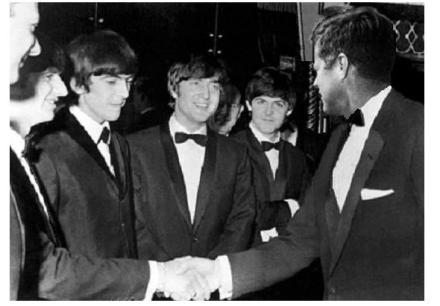
The Day John F Kennedy Met the Beatles – the Story Behind the Short Story

The Day John F Kennedy Met the Beatles – the Story Behind the Short Story

Announcing my first frenetic foray into fiction
I’ve been writing fiction since I was a kid in grade school. I love writing as much as I love reading but getting my stories published has always been frustrating.
Alas, I am writing in an age where fewer and fewer publishers are … publishing.  Were that this be the early twentieth century when newsstands were lined with magazine after magazine filled with fiction of every genre in all their pulpy goodness!
Those days are gone, but now cyberspace has replaced the old newsstand. You can still read stories of any genre and of any length online.
I have published three books online with some success. Regular readers know the titles by heart as I hype them with the frequency of a carnival barker: Abby’s Road, the Long and Winding Road to Adoption, Toddler TV and The Brave & the Bold: from Silent Knight to Dark Knight. All non-fiction.
I have not published any fiction – novels, novelettes or short stories.  Until now!
(trumpet fanfare)
JFK Beatles moptops'
“The Day John F Kennedy Met the Beatles” is a short story (just over 5000 words) available through Amazon.
Wait, you say, John F Kennedy never met the Beatles. True.
All fiction starts with “What if…?”  What if elves and dragons were real? What if man could sail among the stars? What if vampires and zombies roamed the earth? What if three penniless sisters move to Kent, England during the Regency Period and experience love, romance, sense and …
What if Kennedy had lived? Either by surviving the assassination or by it not having occurred at all? What if he lived to see Beatlemania invade American shores? What if he asked them to perform at the White House?
Why would he ask them? Would the Beatles and their management agree? Would they say, “Stuff it”?

As a history buff, my recycling bin is filled with issues ofHistory Channel Magazine (now defunct), Colonial Williamsburg Magazine (name and format now changed), Smithsonian Magazine and Renaissance Magazine.
I wrote “The Day John F Kennedy Met the Beatles” as if it came from such a magazine. It is very fact-driven – even with faux-footnotes.  Remember the old writing trope “show don’t tell”?  This is filled to the brim with “tells”. Think of it as a piece of fiction that thinks it is a piece of non-fiction.
And I like it! But then I say that about everything I’ve written.
But it’s true – I do like this story! It’s the kind of piece I would enjoy reading. I loved doing the research on the Beatles’ history and melding them with a fictional history of Kennedy’s second term.
I’ve also included quotes from the involved parties. Sometimes it was hard getting the voice correct – but I think I succeeded. I am particularly pleased with the quotes from George Reedy (LBJ’s advisor) and the humor in the press conference (“Did you vote for Kennedy?” Lennon: “I didn’t even vote for the queen.”)
I hope you enjoy it. Look for it on Amazon. It is available for viewing on Kindle and only costs $0.99.  You can enjoy it at lunchtime, before bed, or as one of many stories you can enjoy during a lazy summer.
Kennedy meets the Beatles
Here is the link to the short story available through Amazon:
More fiction to come!

Copyright 2016 Michael Curry

What Bankruptcy Can't Do ... Part One: Taxes

WHAT BANKRUPTCY CAN’T DO
Part 1: Taxes
images
For over twenty years, I have helped thousands of people file bankruptcy. I enjoy helping people get out from under crushing debt and to stave off cruel collection agencies.
But there are times when bankruptcy will not help. There are certain kinds of debts that are not affected by filing for bankruptcy.  They are not dischargeable – which means they will survive the bankruptcy. When the smoke clears – these debts will still have to be paid.
State and Federal Taxes are these kinds of debts.
Personal income taxes due can be discharged in either of the individual bankruptcies available – Chapter 7 liquidation and Chapter 13 consolidation or repayment. But your taxes can be discharged only if they can make it over four hurdles:
  1. The taxes had to have been due at least three years before you file for bankruptcy. Earlier this year taxes were due for 2015. Counting backwards that means any taxes owed for 2015, 2014 and 2013 are not discharged if you file for Chapter 7.
When does the clock start ticking? That is an important question that will affect whether or not the taxes will discharge. When is the exact date? Good question. When you file Chapter 7 bankruptcy the IRS will fight like a tiger to have your taxes ruled non-discharged. They have a lot of weapons at their disposal.
Remember that Tax Day is April 15th. If someone filed on April 14th of this year, their 2012 are not yet three years old.
Did you file for an extension for that year? Then the deadline is three years from the extension, not April 15th.

  1. You will have had to file your tax returns for the years in question at least two years before you file your bankruptcy. If you owe for 2012 but you just filed them this past spring, they will survive the bankruptcy.
The key words are “you” and “file”. If you owe for 2010, but Substitute for Return was filed by the state or the IRS and NOT by you directly, that doesn’t count. Always check to make sure it is not a Substitute for Return. This is the most successful trap in the government’s bag. “I think I filed in 2010,” is not going to help – make sure YOU filed your tax returns.

  1. The taxes you owe will have to have been assessed against you for over 240 days. You just found out you owe for 2010 taxes last week? They will survive if you file now. This is rarely a problem for my clients - by the time they come to see me they will have been fighting the IRS for years.

  1. No tax fraud. This is also rarely a problem for my clients. As I tell them, “If you are being accused of tax fraud you would know about it and have a lot more problems than you have now!” If there is any tax fraud I send them to a tax attorney. Then they can come back for the bankruptcy.
***

back-taxes-help
Some clients do not have a problem with their tax debt surviving their bankruptcy. “I can handle the taxes if you can get these credit cards off my back.” That has been the case many times, but occasionally I see someone that only needs to wait a few months.
“It’s July, but if you wait until September it’s possible your taxes will discharge too. Would you like to wait?”
“Yes!”
***
These rules apply to income taxes ONLY. Sales tax from your business, employment tax, use tax, etc. are NOT subject to these four criteria. Those kinds of tax debt WILL NOT discharge if you file a Chapter 7.
***
However, ANY non-dischargeable taxes (income, sales, employment, use, etc.) owed can be paid in a Chapter 13. In some jurisdictions (like mine), taxes are not allowed to be paid interest. Interest continues to accrue in the three-to-five years you are paying into your Chapter 13 Plan. Depending on the amount owed, you may owe MORE at the end of the Plan than at the beginning - because of interest.
As said above, I have had clients say, “I can deal with that, as long as they stop collecting it in the meantime. If I can get the credit cards, the medical bills AND the IRS off my back for five years and all I’ll have is the IRS when it’s done, that okay.” I still have them sign an acknowledgment advising them about the interest.
Can the IRS or state still take your tax refund while you are in a Chapter 13? Tricky question. And it depends on the district in which you live. In my practice, the answer is “No, they are not supposed to”. Usually the Chapter 13 Trustee takes the refund, so there is not much to be gained by fighting over it – let the Trustee and IRS duke it out instead. If you live in an area where you are allowed to keep some of your refund, it is worth the fight. In my district we are very lucky – the IRS and Illinois Department of Revenue are wonderful to work with and tax return captures are rarely a problem.
As always, if you have tax issues and wonder if bankruptcy will help, consult a local skilled bankruptcy attorney. Consider this a guideline only.
I’ll discuss more debts that are non-dischargeable next time.
Copyright 2016 Michael Curry

My name is Michael Curry and I have practiced law in Mount Vernon, Fairfield, Flora and throughout Southern Illinois since 1992. During that time, I have helped more than 5,000 people (and businesses) overcome their financial difficulties by filing for bankruptcy. As a solo practitioner, I will also be happy to help protect you and your family’s future with estate planning, wills, powers-of-attorney, real estate transactions and other legal services.
Please call or text me at 618-246-0993, email me at michael.curry.law@gmail.com  or send me a letter:     123 South 10th Street, Suite 507, PO Box 93, Mount Vernon, IL 62864